
2025 State of the Market Benchmarking Overview
In April 2025, Zywave conducted the State of the Market Survey to gain insight into employers’ perspectives on the current market landscape and broader business environment. Organizations across the United States were polled on a variety of key issues, including the overall economic climate, current business challenges, and strategies for attracting and retaining talent. With over 1,000 respondents, this survey provides a comprehensive snapshot of employer sentiment in 2025, offering valuable insights into perceptions of the economic climate, workplace hurdles and emerging workforce strategies. This report aims to establish a general benchmark for the current state of the market and its impact on employers.
Demographics
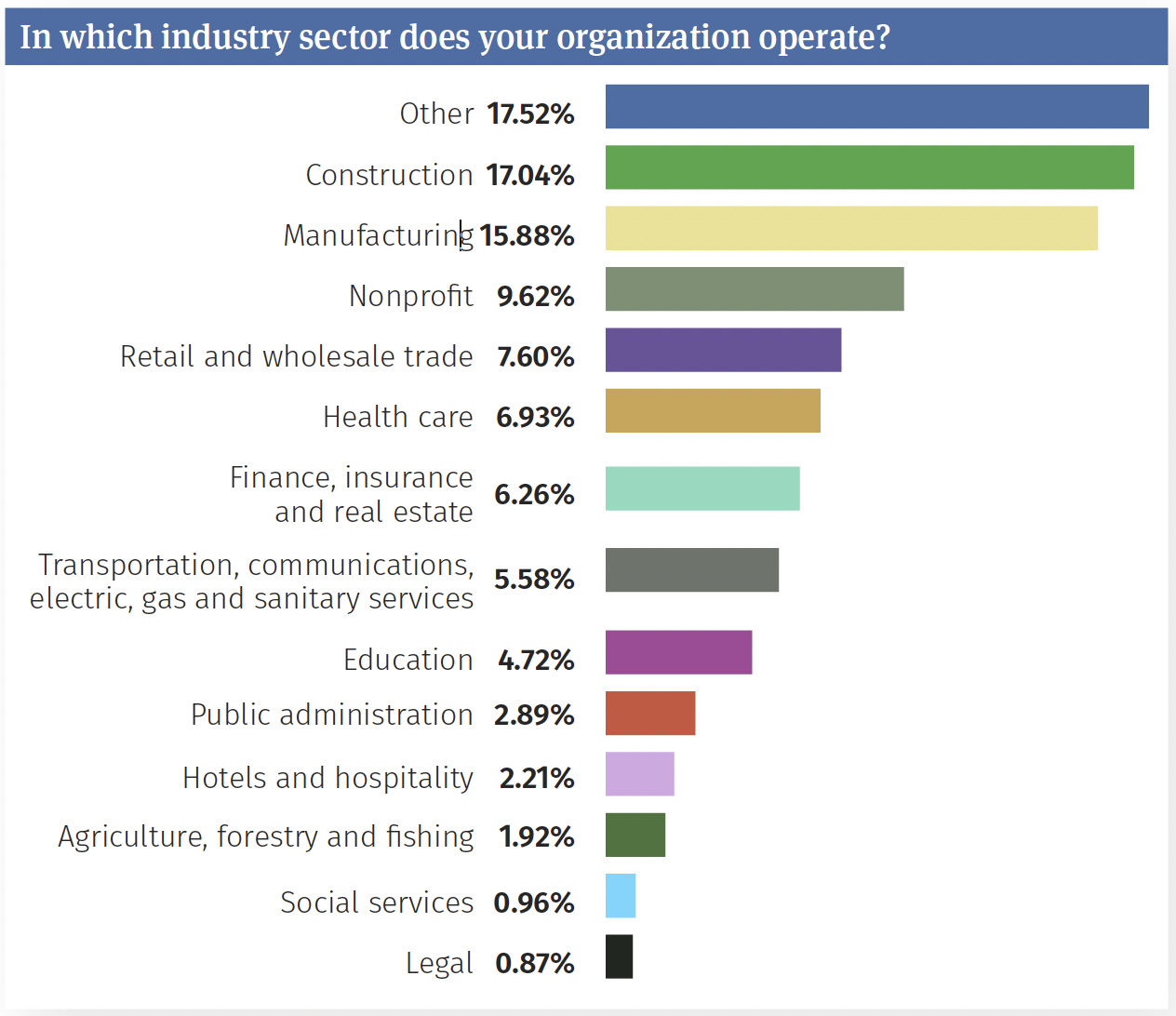
More than 1,000 employers nationwide completed the 2025 State of the Market Survey. The majority of respondents (92%) were from small and midsize businesses (SMBs), which employ fewer than 500 workers.
Executive Summary
Zywave’s 2025 State of the Market Survey captures the perspectives of over 1,000 U.S. employers—primarily from SMBs—on the current economic and business climate. The findings reflect a cautious outlook. Many employers report that inflation, high interest rates and rising health care costs are negatively impacting organizational performance. Nearly half of the respondents expect these conditions to persist through the remainder of the year, while almost one-third anticipate further decline.
Economic uncertainty emerged as the most pressing challenge, followed closely by inflation and escalating health care expenses. Employers also expressed concern over talent attraction and retention, as well as navigating a shifting regulatory landscape under a new presidential administration. These concerns are compounded by fears of a potential recession, supply chain disruptions due to tariffs and an ongoing shortage of qualified workers.
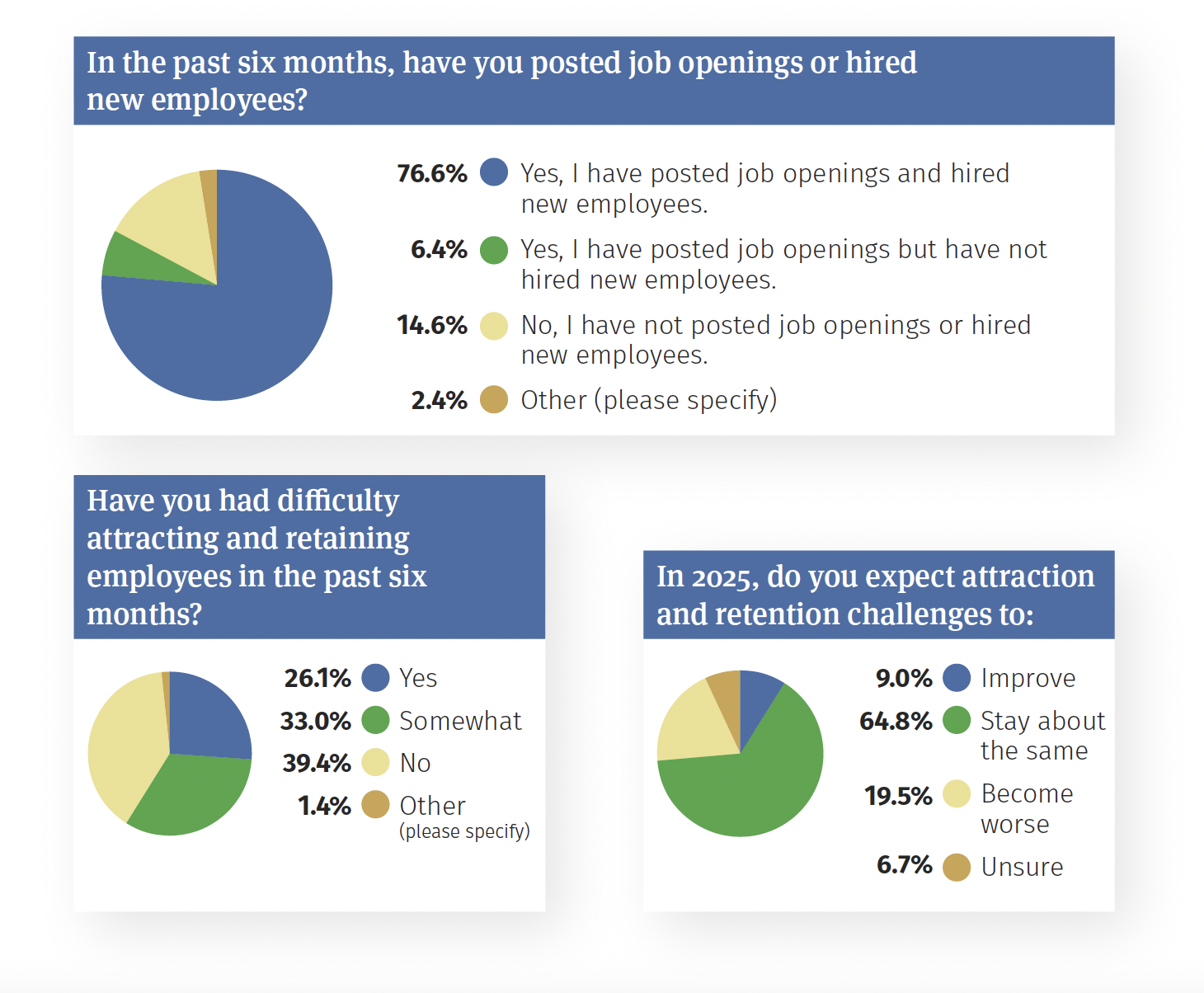
Despite these challenges, many organizations are actively adapting. Most have continued hiring or posting job openings, and even though labor market pressures have eased slightly compared to previous years, around 60% of employers still report difficulties in attracting and retaining talent. To address this, employers are focusing on strategies such as boosting employee engagement, increasing compensation, expanding learning and development opportunities, redesigning onboarding processes and adopting skills-based hiring practices.
Even though labor market pressures have eased slightly compared to previous years, around 60% of employers still report difficulties in attracting and retaining talent.
Compliance with new rules and regulations also ranks high among employer concerns, with 1 in 4 employers citing it as a top challenge. Key areas of focus include changes in federal employment laws; increased agency enforcement; evolving diversity, equity and inclusion (DEI) policies; and immigration-related enforcement activities. These regulatory shifts are prompting employers to stay vigilant and agile in their compliance efforts.
The current business environment is undoubtedly marked by uncertainty and change. Employers are responding with a mix of caution and innovation, seeking to balance cost pressures with workforce needs. Organizations that remain informed and adaptable are more likely to navigate the year’s challenges successfully and position themselves for long-term resilience.
Market Conditions
The 2025 State of the Market Survey asked employers about the current business environment, including the overall economic climate. This section compiles these responses and provides general insights regarding the workplace in 2025.
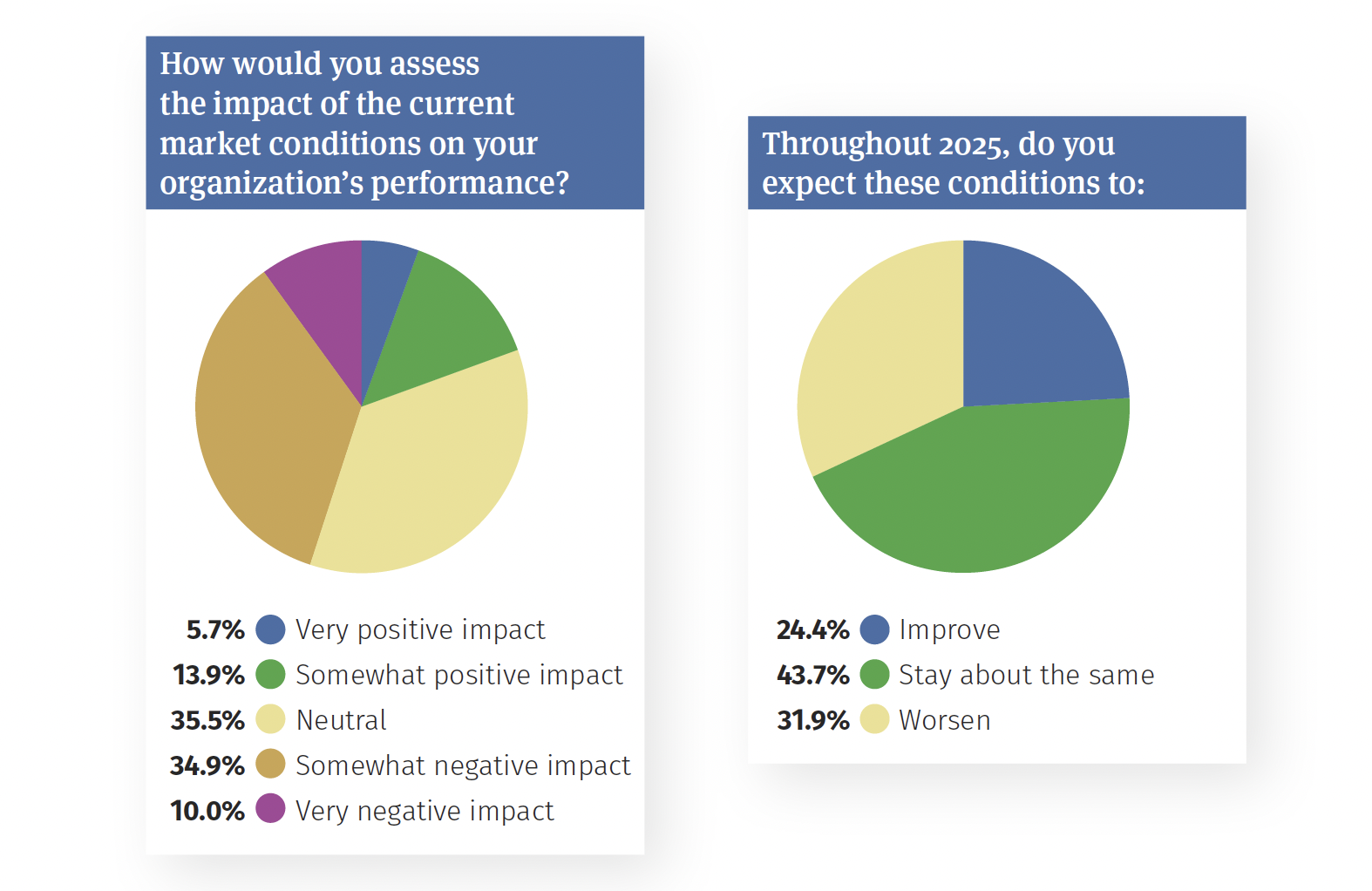
In general, employers’ perceptions about current market conditions skew somewhat negatively on their organizational performance. As the year continues, many aren’t sure what to expect. While almost half expect the market to remain the same, more are leaning toward conditions to worsen.
Speculation about changing market conditions is being fueled by both new and familiar factors. First, new presidential administrations often create uncertainty, and 2025 is no different. Employers are unsure about the economy as they navigate rapid changes, policy shifts and overall market uncertainty. While these factors present changes to market conditions, other employers cite other well-known challenges as likely to disrupt the market, such as health care costs and the labor market.
Employers who are anticipating market conditions to change cited the following reasons:
Tariffs and trade policy—Many employers shared concerns that tariffs will impact their businesses in terms of how they receive supplies, materials and goods and, ultimately, the cost of goods sold.
Inflation and a potential recession—As inflation rises, many are worried about a looming recession. Organizations are also worried about reduced consumer spending as many struggle to purchase everyday essentials and are more cautious about how they spend their paychecks.
Health care costs—Health care costs continue to outpace inflation. According to industry surveys and reports, employers anticipate health care costs to increase by 7%-8% in 2025. As a result, employer-sponsored health care plans will continue to cost more per employee, impacting employers and employees alike.
Layoffs—Layoffs continue to trend across industries as companies manage their bottom lines. Organizations that rely on state and federal spending may also face workforce reductions due to program cuts and shifting budget allocation.
Lack of qualified workers—Organizations across industries believe that the shortage of qualified candidates will continue to worsen, making it tough to find and keep skilled and educated workers. Employers in industries that rely heavily on foreign workers also cited that employment restrictions would impact them this year.
Organizational Challenges
The 2025 State of the Market Survey asked about organizations’ most pressing business challenges. This section compiles these responses and provides general insights regarding the labor market in 2025.
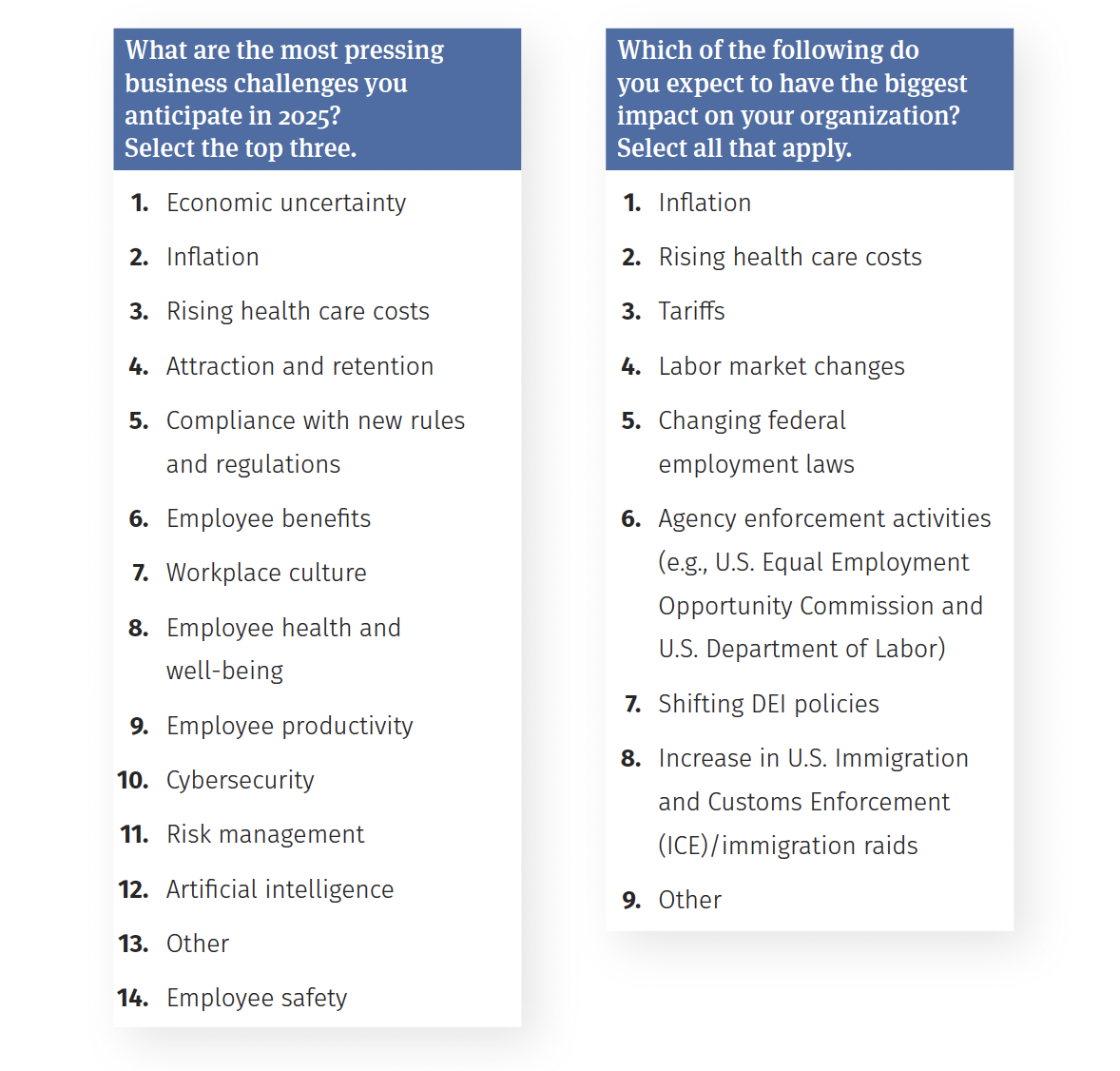
Survey respondents reported that their top challenges in 2025 revolve around economic uncertainty, rising health care costs, attraction and retention efforts, and compliance with new rules and regulations. As previously mentioned, these top concerns aren’t surprising as a new administration takes over and rolls out new or changing policies.
Managing Economic Uncertainty
Employers have become familiar with a fluctuating economic state. In the last few years, the United States has faced a pandemic, disrupted supply chains and high inflation. Now, there are talks about tariffs, a shifting stock market and speculation that the country will enter a recession. With 59.04% of employers citing economic uncertainty as a primary challenge, businesses are assessing how these evolving conditions will impact operations, growth strategies and workforce stability.
Beyond immediate financial concerns, economic uncertainty can also affect employee confidence and business investment. Employers must remain agile in their response, leveraging real-time economic data, government policies and industry trends to inform decisions. Those who successfully anticipate and adapt to market shifts may be better positioned to navigate 2025’s unpredictable environment and emerge more resilient.
Navigating Inflation
According to the survey results, inflation (64.11%) is the most pressing challenge employers expect to face this year. Keep in mind that employees are also concerned about these financial pressures in their personal lives.
The consumer price index (CPI) reading unexpectedly fell in March; however, it didn’t paint the full picture since the figures don’t capture the first wave of import duties imposed on April 4. The CPI report in April showed slight disinflation. The latest reading, slightly lower than expected, is the lowest level since February 2021. However, the core CPI is still above the Federal Reserve’s 2% target. The recent slowdown in inflation is likely temporary, and most economists expect inflation to pick up in the coming months.
While inflation may be lower than in previous years, compounding cost increases year over year continue to strain businesses and organizations of all sizes. In addition, employers are raising concerns that inflation rates could increase as the year goes on. As such, employers must remain agile in their approach to spending to successfully navigate the remainder of the year.
Mitigating Rising Health Care Costs
Consistent with the prevailing trend in recent years, mitigating the rising costs associated with health care benefits is what employers believe to be a top-three pressing challenge (42.49%) to employers. Furthermore, half of the surveyed employers (55.09%) expect health care costs to have the biggest impact on their organizations. Over the last year, employer health care costs have continued to increase as health care inflation continues to outpace general inflation.
Reigning in rising health care costs has historically been a top employer challenge, and it’s becoming increasingly difficult in 2025 amid other financial pressures. The current economic conditions likely have many SMBs operating with smaller budgets. As employers brace for further health care cost hikes in 2025, they are urgently searching for solutions to manage their growing costs and address the long-term impacts of these increases on their organizations. In previous years, many employers absorbed the increases themselves due to a tight labor market. Now, many employers have no choice but to pass on some of the health care cost increases to workers. Planning and embracing bold strategies may be the only way to help employers rein in these costs and keep employees healthy. In fact, savvy employers will do more than just plan to absorb these costs. Passing on costs may be inevitable, but focusing on plan design, educating employees to be good health care consumers, and supporting health and wellness initiatives can lower costs while minimizing employees’ access to quality health care.
Mitigating the rising costs associated with health care benefits is what employers believe to be a top-three pressing challenge (42.5%) to employers.
Complying With New Rules and Regulations
Compliance challenges (26.7%) ranked fifth in the survey. Again, this isn’t surprising given the new presidential administration and changes at the state level. More than one-quarter of employers are finding it difficult to keep up with compliance and understand how the new rules and regulations impact their organization and workers.
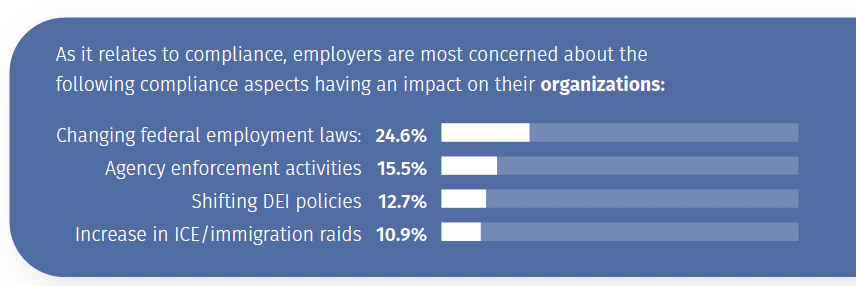
Keeping up with compliance developments can be difficult and time-consuming. Between a new administration and fast-changing trends at the state level, savvy employers are striving to stay on top of new requirements and minimize compliance risks. Staying ahead of applicable requirements and navigating these changes effectively requires staying current on compliance trends, establishing and using dedicated resources, and leading with a strategic approach to risk management.
While this section highlighted broader organizational challenges, the next section explores the current challenges of employee attraction and retention employers face.
Attraction and Retention
Attraction and retention are not the dire workplace challenges of recent years, but “labor market changes” is the No. 4 top business challenge, right behind economic uncertainty, inflation and rising health care costs.
Around 60% of respondents still at least somewhat struggle with attracting and retaining employees, down from previous surveys. Most organizations expect these challenges to stay about the same.
To win over workers, employers are improving employee engagement, raising compensation, and focusing on learning and development (L&D) opportunities. Although the pace of hiring overall slowed in 2024, it appears to be picking back up. The majority of employers participating in the survey said they’ve hired a new employee or posted a job in the past six months.
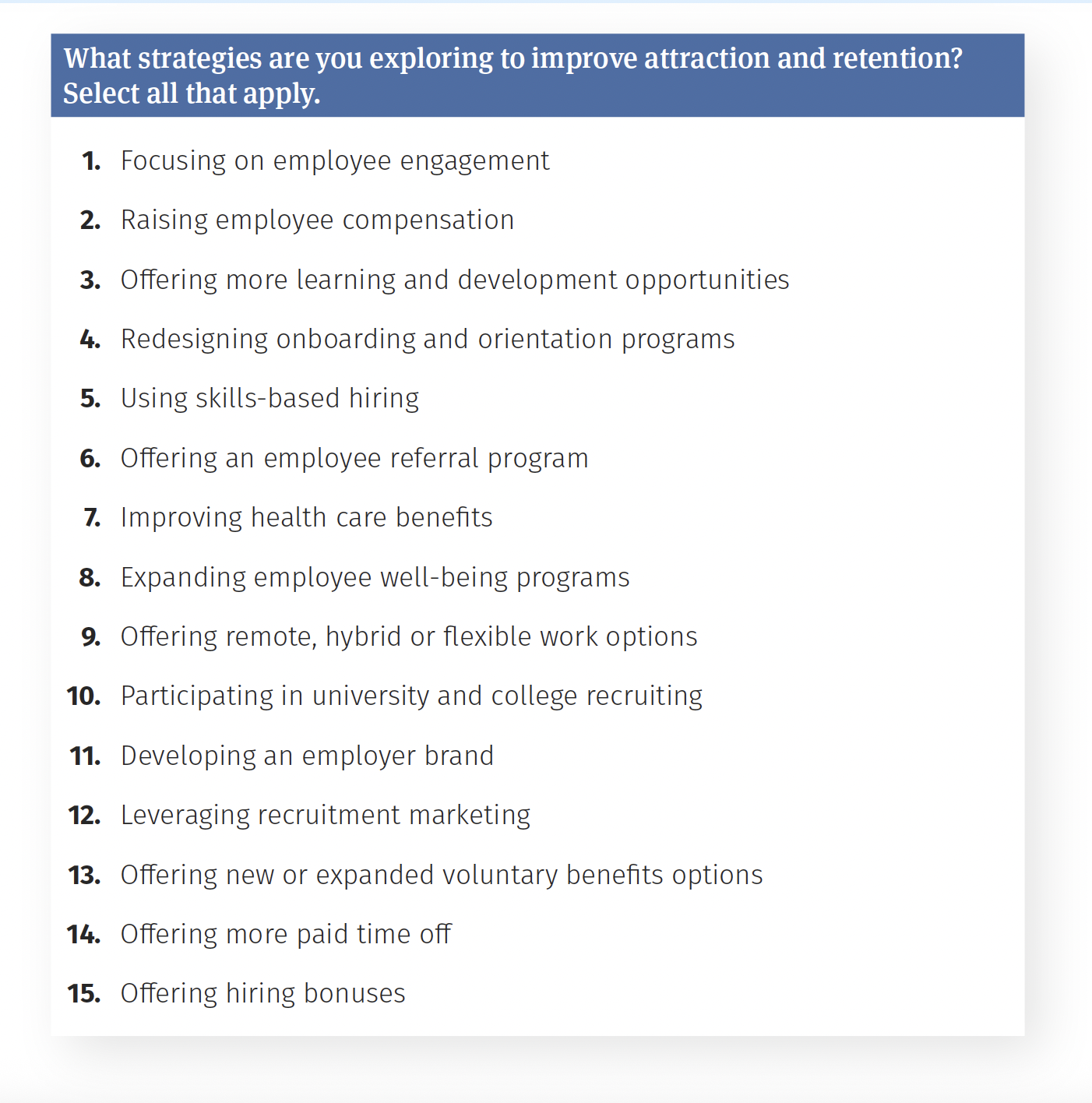
Here are the top five strategies that employers are pursuing to boost their employee attraction and retention:
Focusing on employee engagement—With employee engagement reports showing levels near a record low, employers have an opportunity to engage employees to retain more employees and support overall business health. Some examples of engagement efforts include flexible work arrangements, mental health support, personalized career development opportunities and recognition programs. Engagement efforts may be employers’ go-to strategy right now since this approach can have fewer cost requirements than other key strategies like significant compensation raises, which aren’t feasible for all organizations.
Raising employee compensation—Compensation remains a critical factor in winning over workers. Significant pay raises won’t be feasible for all employers, but they remain one of the best ways to attract and retain talent. It’s likely that employers will continue increasing wages to keep up with inflation and remain competitive in the labor market.
Offering L&D opportunities—Employers who strategically leverage L&D opportunities (e.g., career pathing, mentoring and microlearning) can create resilient and high-performing work environments where employees thrive and grow while meeting organizational goals and needs.
Redesigning onboarding and orientation programs—An employee’s first 90 days are arguably the most important ones for retention. As such, employers are finding that redesigning or building structured onboarding and orientation processes is a low-cost way to engage and retain employees more effectively.
Using skills-based hiring—Skills-based hiring has been a growing trend for years, and this survey revealed that it has become a common attraction and retention strategy for employers. Now, many are expanding their talent pool by hiring for open positions based on skills rather than education or experience. As many employers in this survey shared concerns about the lack of qualified candidates, skills-based hiring may help them find strong candidates they weren’t considering before.
Finding, hiring and keeping talent is crucial, and many of the strategies that employers are exploring also have the potential to drive better organizational outcomes.
Conclusion
The 2025 State of the Market Survey highlights the ongoing economic uncertainty employers face combined with a new administration shaping policies that could significantly impact business operations. Even though the full effects of inflation, tariffs, and broader market shifts remain to be seen, employers have an opportunity to adapt proactively.
Organizations that focus on efficiency, employee engagement and strategic workforce planning can position themselves for success in a competitive labor market. While the most effective strategies will differ by industry and company size, staying informed about evolving challenges and leveraging key insights from this survey will help employers make confident, forward-thinking decisions in 2025.
Contact us today for more organizational resources or information on any topics discussed in this report.
2025 State of the Market Benchmarking Overview. © 2025 Zywave, Inc. All rights reserved.
